
We guide the people and organizations building serious humanitarian work.
Live humanitarian updates, reference markets, and independent headlines.
Useful signals for people who need to understand context before they act.
Gold · EUR/USD
TradingViewChoose the door that matches why you came.
Academy & certificates
Structured courses, quizzes, exams, certificate verification, AI topics, MEAL, grants, data protection, and organizational readiness.
Start learning → Global platformAtlas directory
Discover organizations, opportunities, grants, funders, CV tools, member services, and claim or verify organization information.
Explore Atlas → Free libraryTemplates & policies
Ready-to-adapt governance, finance, safeguarding, MEAL, donor-readiness, and organizational systems templates.
Browse the library → MembersMember tools
An AI Governance Assistant and a Work Planner to support your day-to-day work.
Open member tools → PublishingBooks
The Confluence Series is live in the platform, with Amazon/KDP availability tracked on the book pages and more ecosystem titles to connect.
View books → ResearchEssays & SSRN papers
Public working papers, field notes, research frameworks, thesis material, and practical essays for humanitarian governance.
Read the research → ToolsConverters & utilities
Currency, calendar, data, field-planning, and practical conversion tools designed for international teams and multilingual visitors.
Use the tools → SupportServices & advisory
Capacity development, rapid assessment, quality systems, MEL, funding readiness, field-data support, and implementation guidance.
See services →A public knowledge platform with a practical working layer.
Visitors can read and learn freely. Members can save work, use tools, request services, follow courses, submit research, claim organization profiles, and build credibility through verified information.
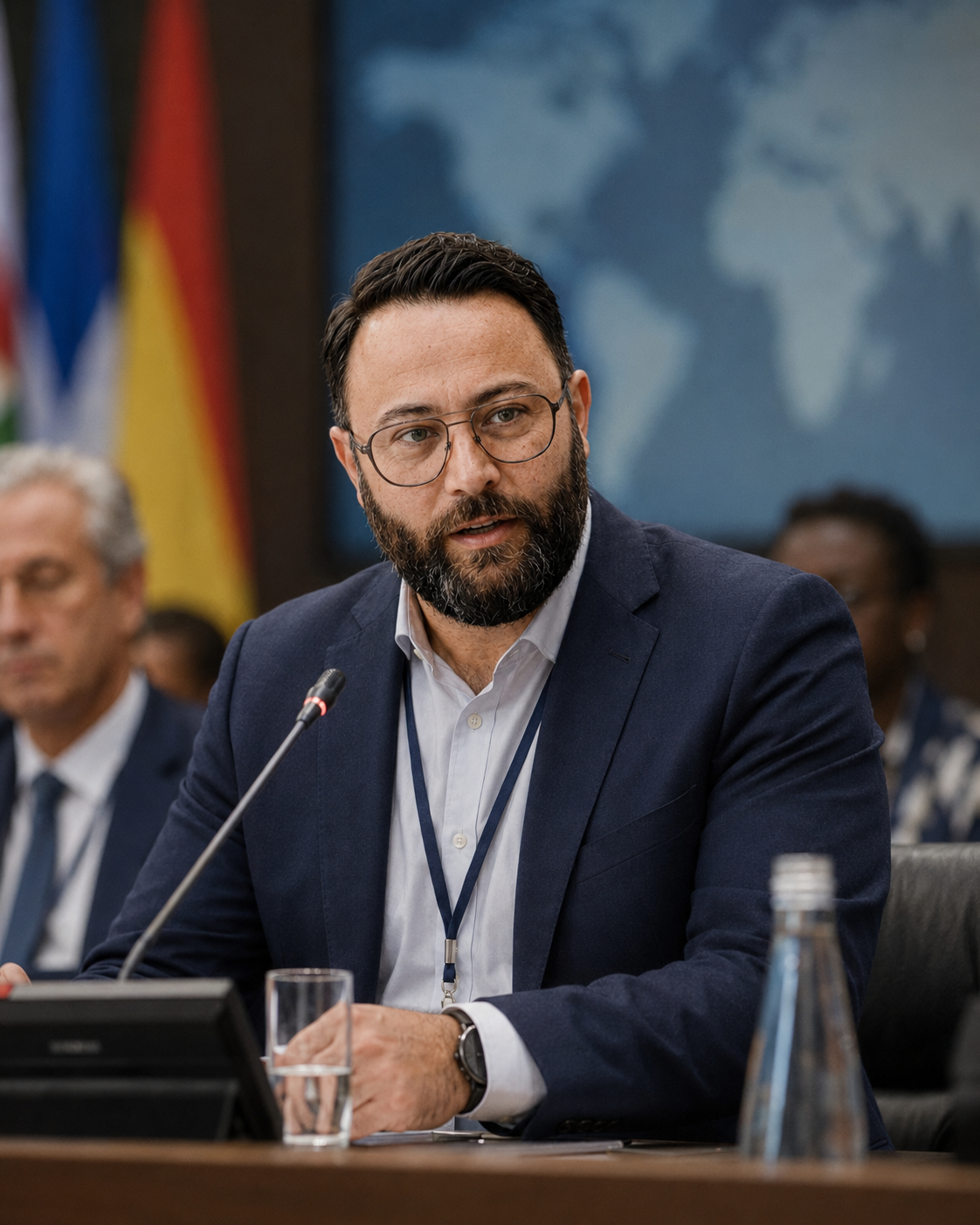
Mohammed Al-Hajjaj — writing as Olaf Dawson
The platform is shaped from field operations, NGO governance, finance, logistics, donor relations, research, quality discipline, and institutional imagination. It is built to help useful knowledge become systems people can actually use.
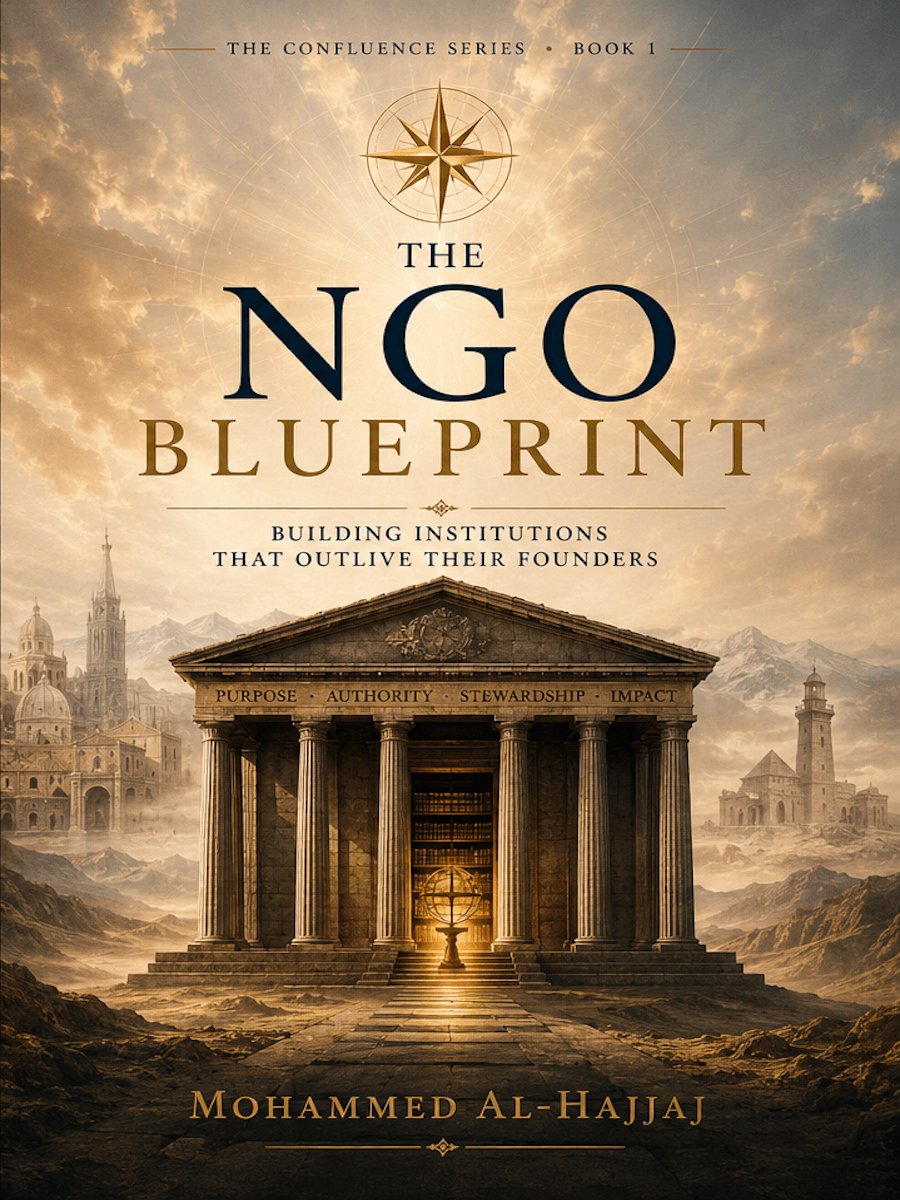
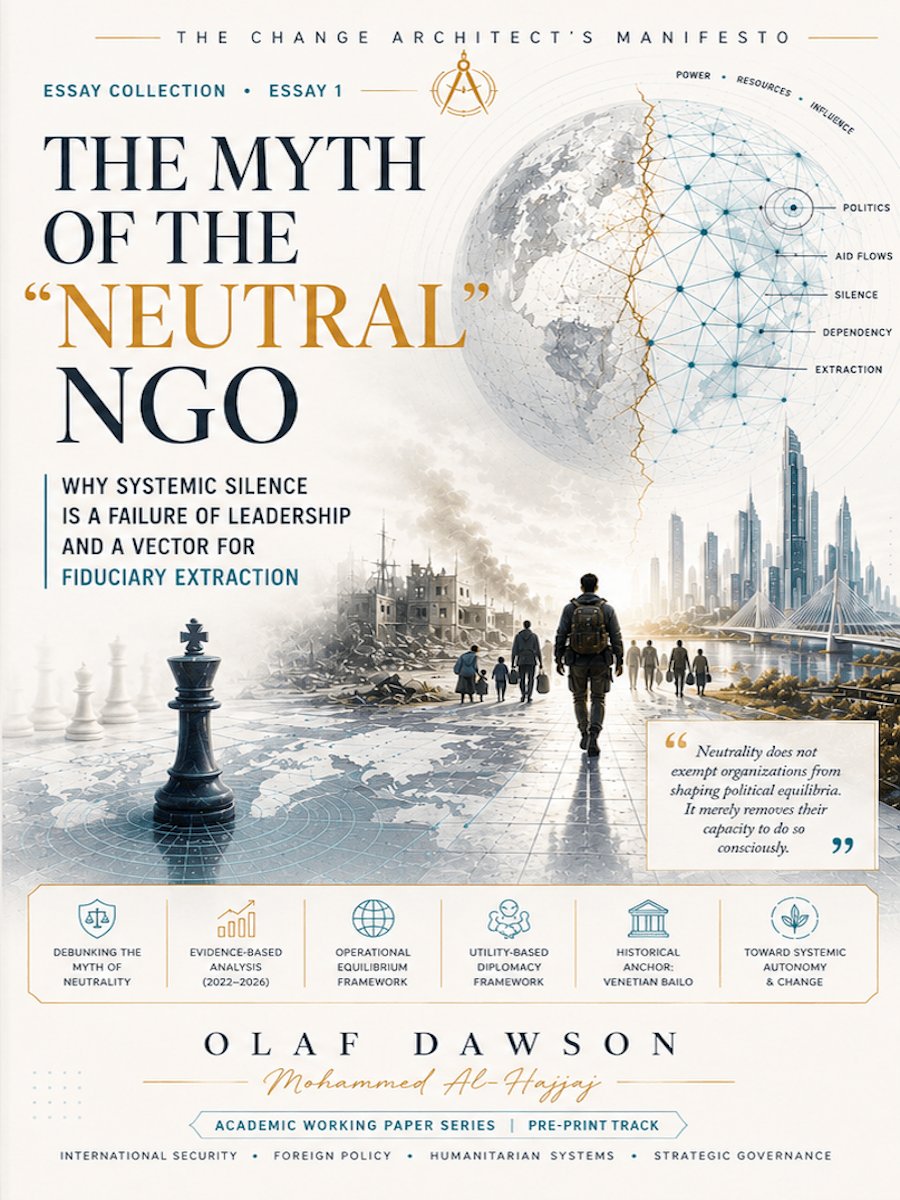
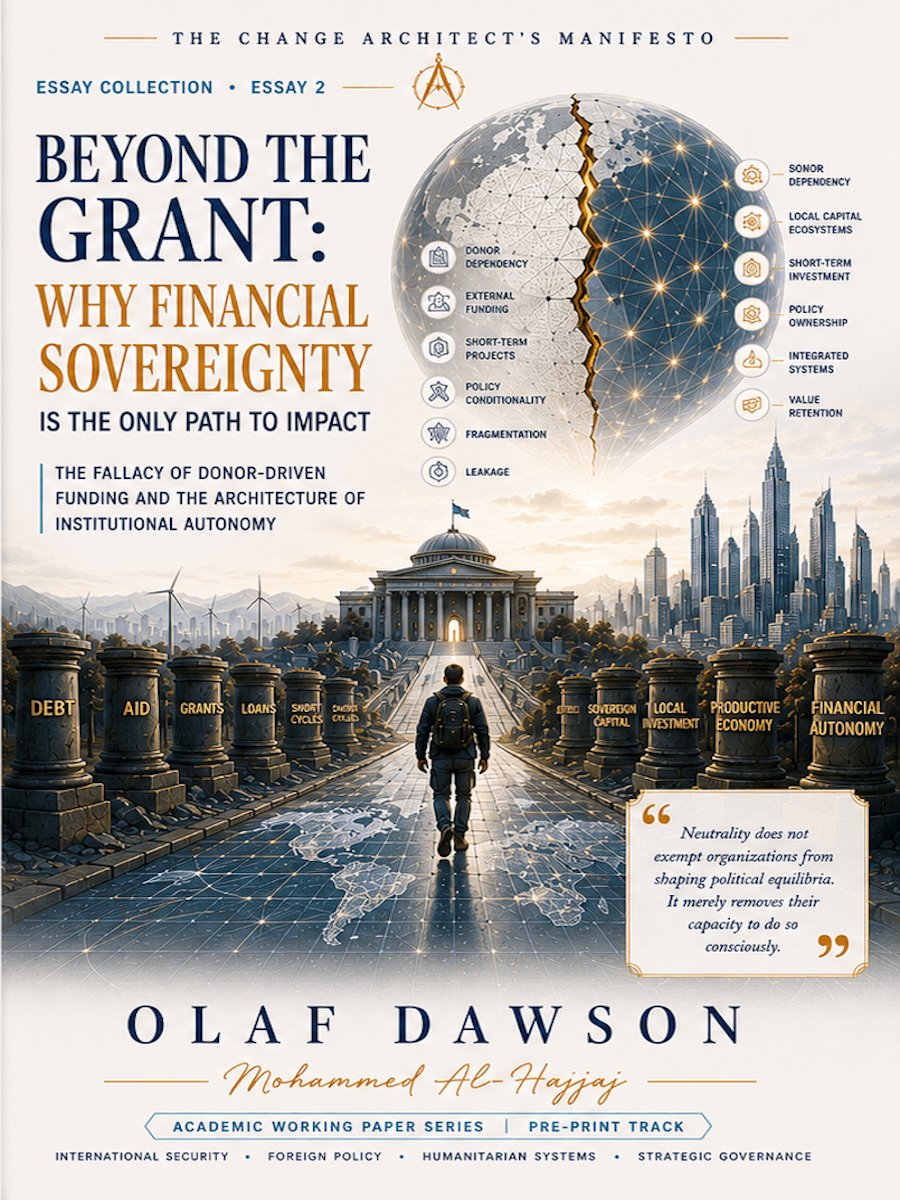
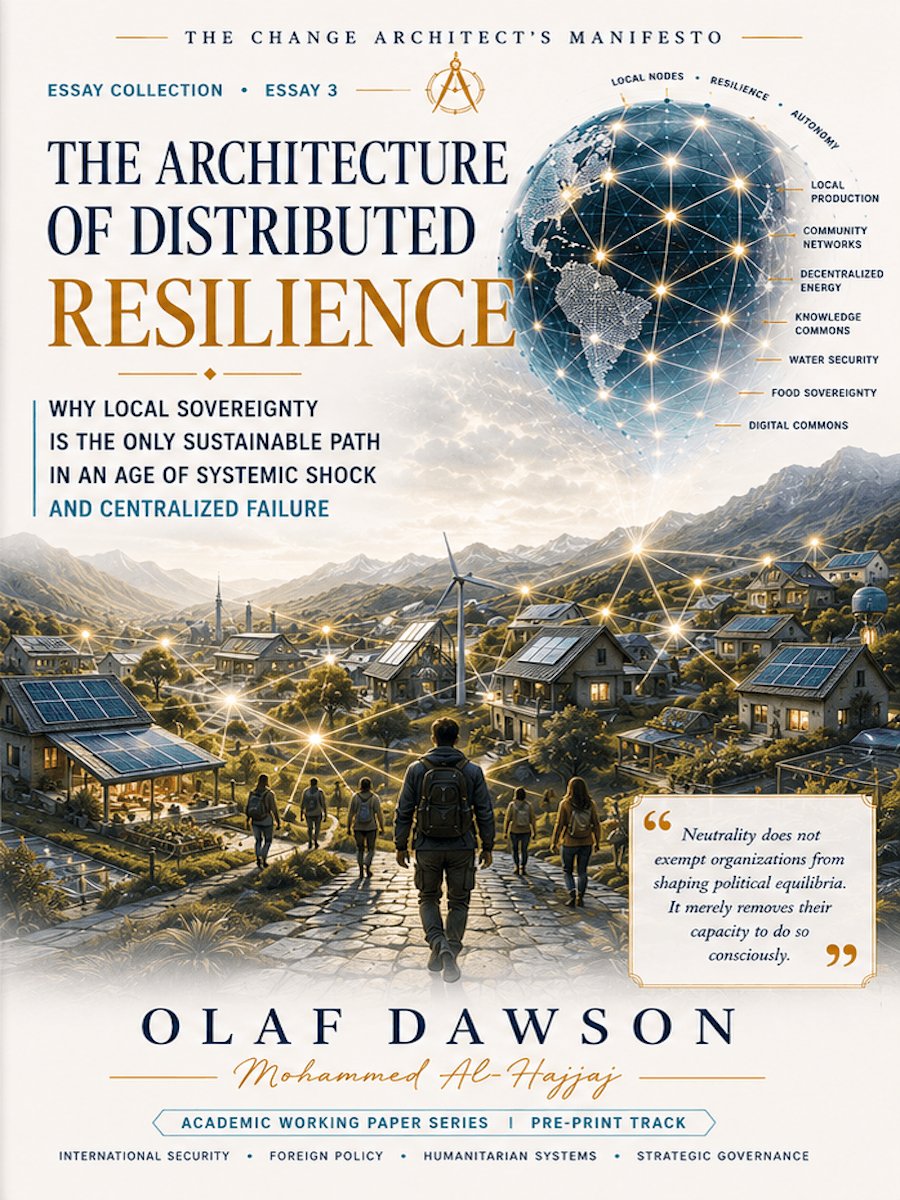
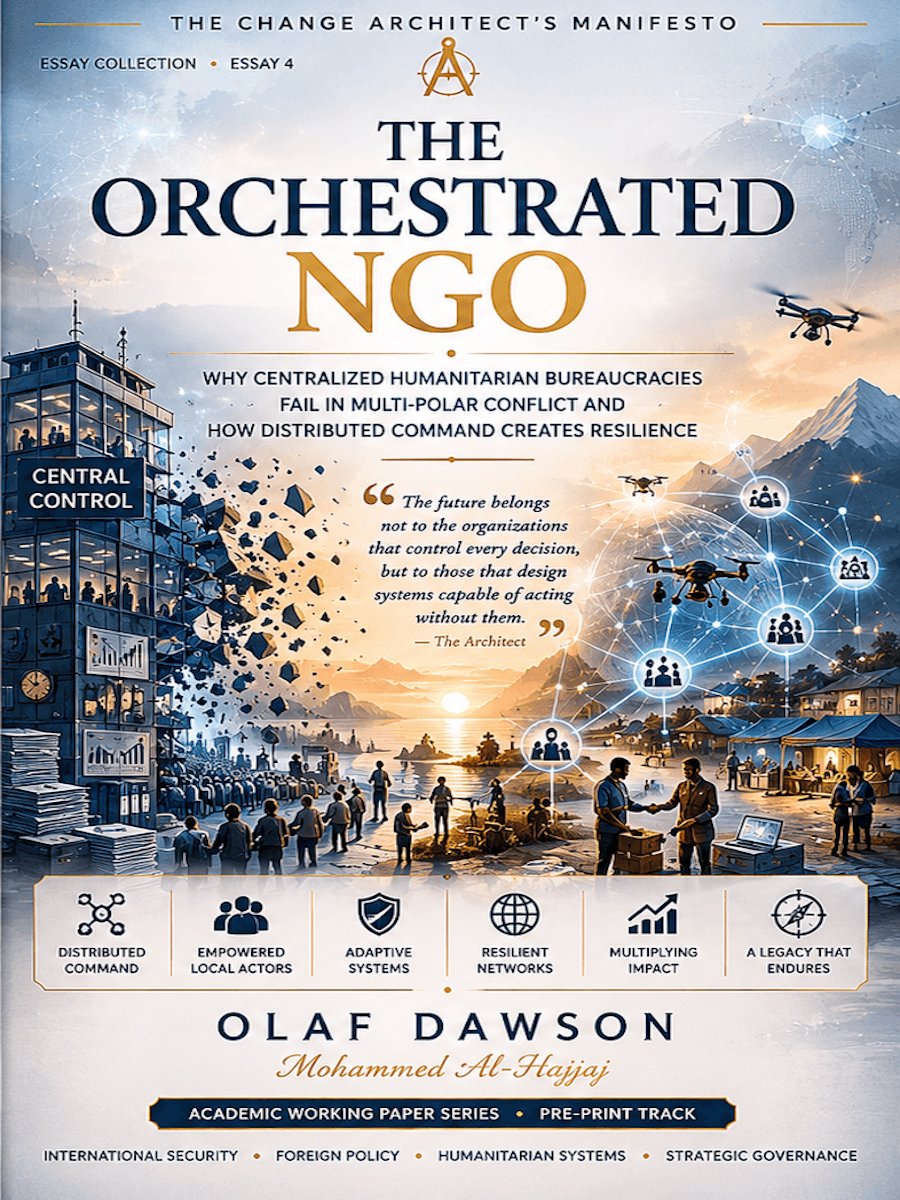
One publishing shelf, one intellectual direction.
The books, SSRN papers, field notes, and future ecosystem titles belong together: practical humanitarian governance, institutional maturity, financial sovereignty, operations, influence, and quality systems.
Measuring what the sector usually only asserts.
Dependency Coefficient
How exposed an organisation is to a single donor — near 1.0 signals the fragility that USAID’s closure exposed.
Intermediary Paralysis Factor
How fast centralised INGO networks seize up under multi-actor disruption.
Equilibrium Shift
How a resource injection moves local factional control — neutrality made measurable.
Fiduciary Autonomy Index
The degree of genuine financial self-determination behind a mission.
Decentralised Decision Ratio
How much real authority sits with frontline and local actors.
A home for research that struggles to find one.
Too much good thinking in this sector never reaches an audience because the doors to publication are narrow. If you have research, an essay, or a field analysis worth sharing, send it to us — after a light quality review, we host it here, credited to you, as part of a growing commons.
Independent work, transparently funded.
This is independent scholarship by one researcher. Contributions fund the writing, the journal submissions, and the build-out of the Confluence Series — and the platform grows, openly, day by day.
Contributions support Mohammed Al-Hajjaj as an individual researcher. This is not a registered charity or NGO, and contributions are not tax-deductible.
Current calls, grants, and openings.
A compact source door for humanitarian jobs, training, grants, calls, and partner interest. Always verify details at the original source before acting.
Built for organizations, researchers, learners, and partners.
The next layer is the network: verified organizations, academic contributors, trainers, authors, local partners, advisors, and institutions that want stronger humanitarian systems.