
The research library.
Working papers, a companion book series, a thesis, and the analytic frameworks behind them — all transparently tracked through journal review and SSRN availability.
Where the work stands, transparently.
| Working paper | Target journal | Manuscript ID | SSRN | Status |
|---|---|---|---|---|
| The Myth of the “Neutral” NGO | Journal of Humanitarian Affairs | JHA-2026-0035 | 6822378 | Under review |
| Beyond the Grant | Nonprofit & Voluntary Sector Quarterly | NVSQ-AR-26-0285 | 6879382 | Under review |
| Decolonizing the Frontline | Third World Quarterly | — | 6882658 | Under review |
| The Architect’s Mandate | Voluntas (Cambridge University Press) | VTS-2026-0330 | 6889062 | Under review |
Working papers are pre-print manuscripts under peer review. Status is updated as the review process advances.
The Change Architect’s Manifesto
A connected four-essay argument: that humanitarian failure is, at root, a failure of governance — and that it can be measured, and redesigned.
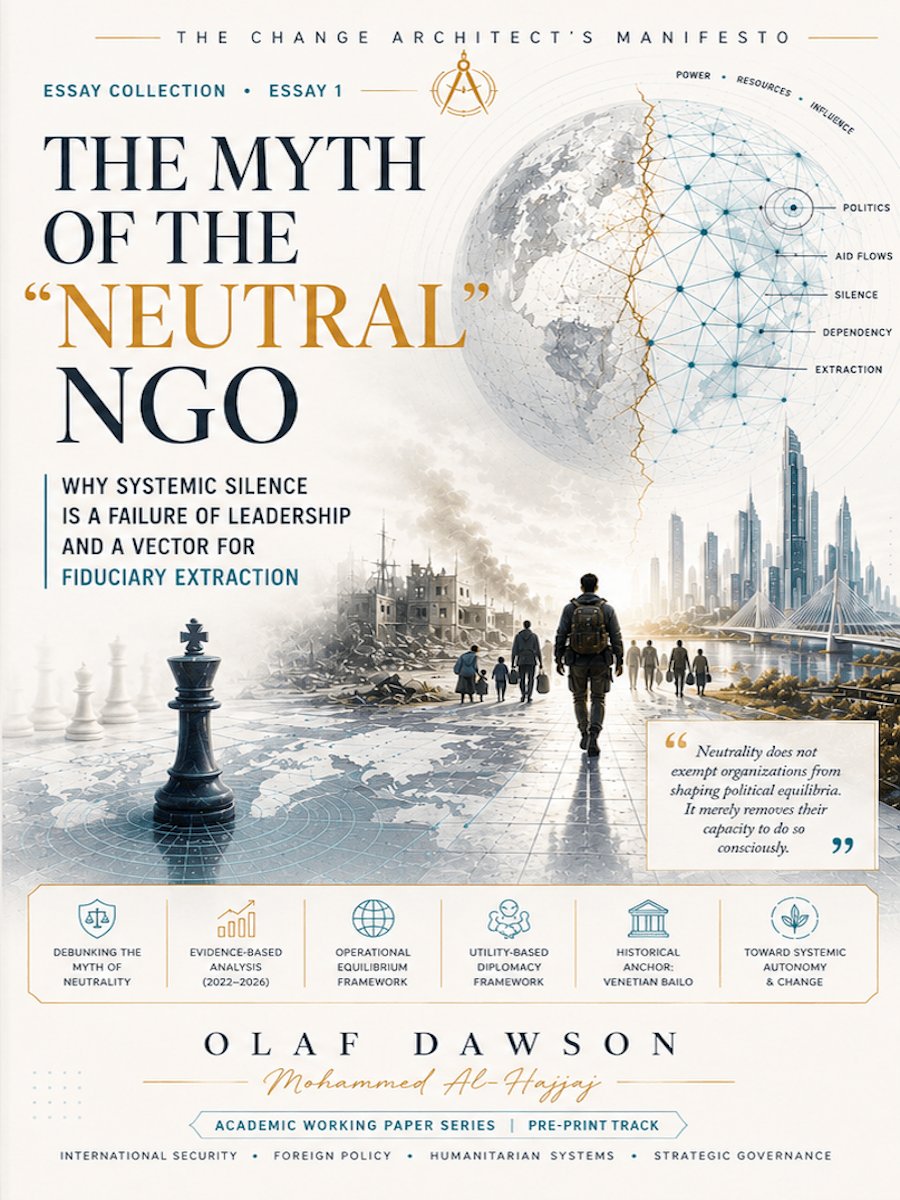
The Myth of the “Neutral” NGO
Why systemic silence is a failure of leadership and a vector for fiduciary extraction.
For decades the sector has treated neutrality as a moral default. This paper argues that neutrality, practiced as systemic silence about the political roots of suffering, is no longer defensible — every injection of aid shifts local power. It introduces the Operational Equilibrium Shift (Δes) to quantify that shift, validates it against the 2023 Sudan response, and proposes Utility-Based Diplomacy: protecting humanitarian space by becoming operationally indispensable rather than politically invisible.
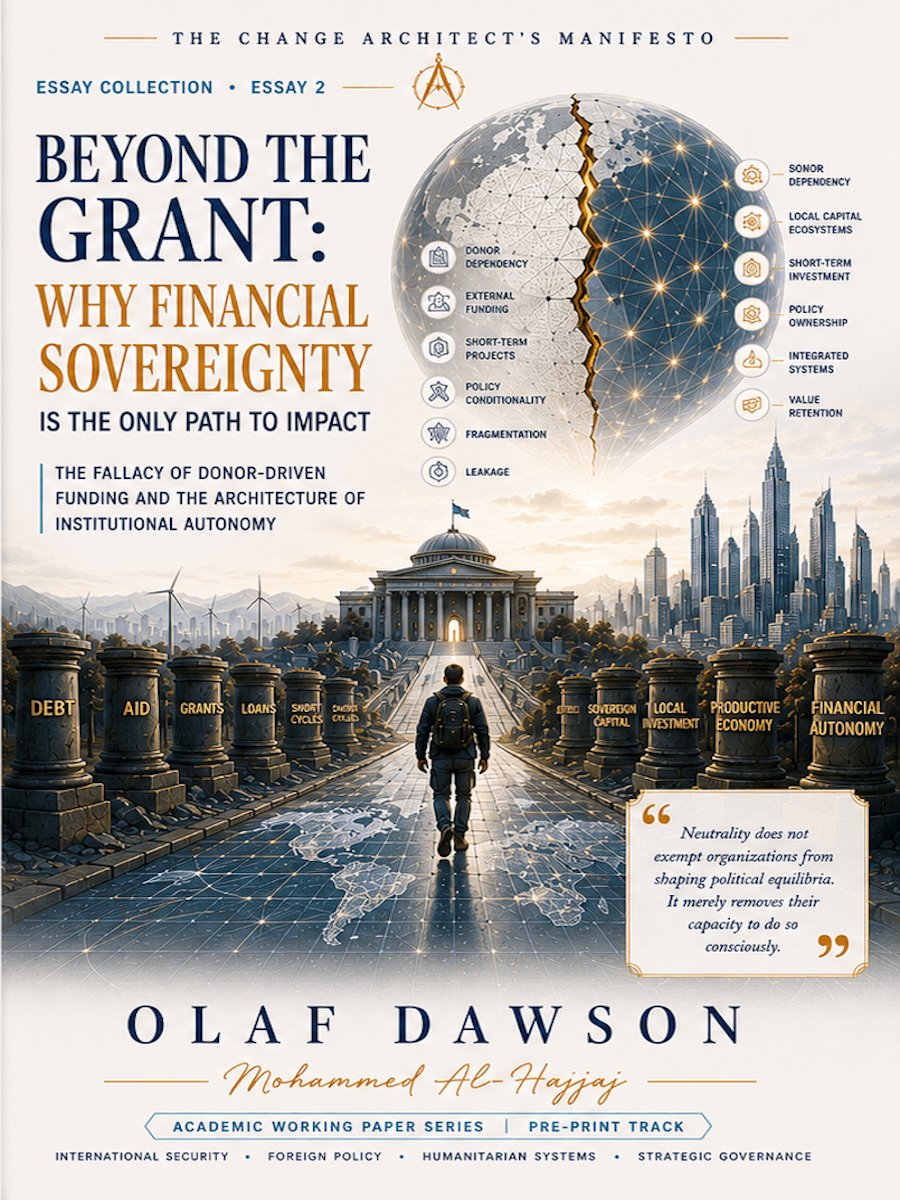
Beyond the Grant
Why financial sovereignty is the only path to impact.
Aid dependency is a design choice, not a fate. This paper argues that financial sovereignty — not larger grants — is the only durable route to impact, and introduces the Dependency Coefficient (Λd) and the Fiduciary Autonomy Index (FAI) to measure how exposed a mission is to a single donor and how much genuine self-determination sits behind it. The fragility exposed when major donors withdraw is treated not as bad luck but as a predictable structural outcome.
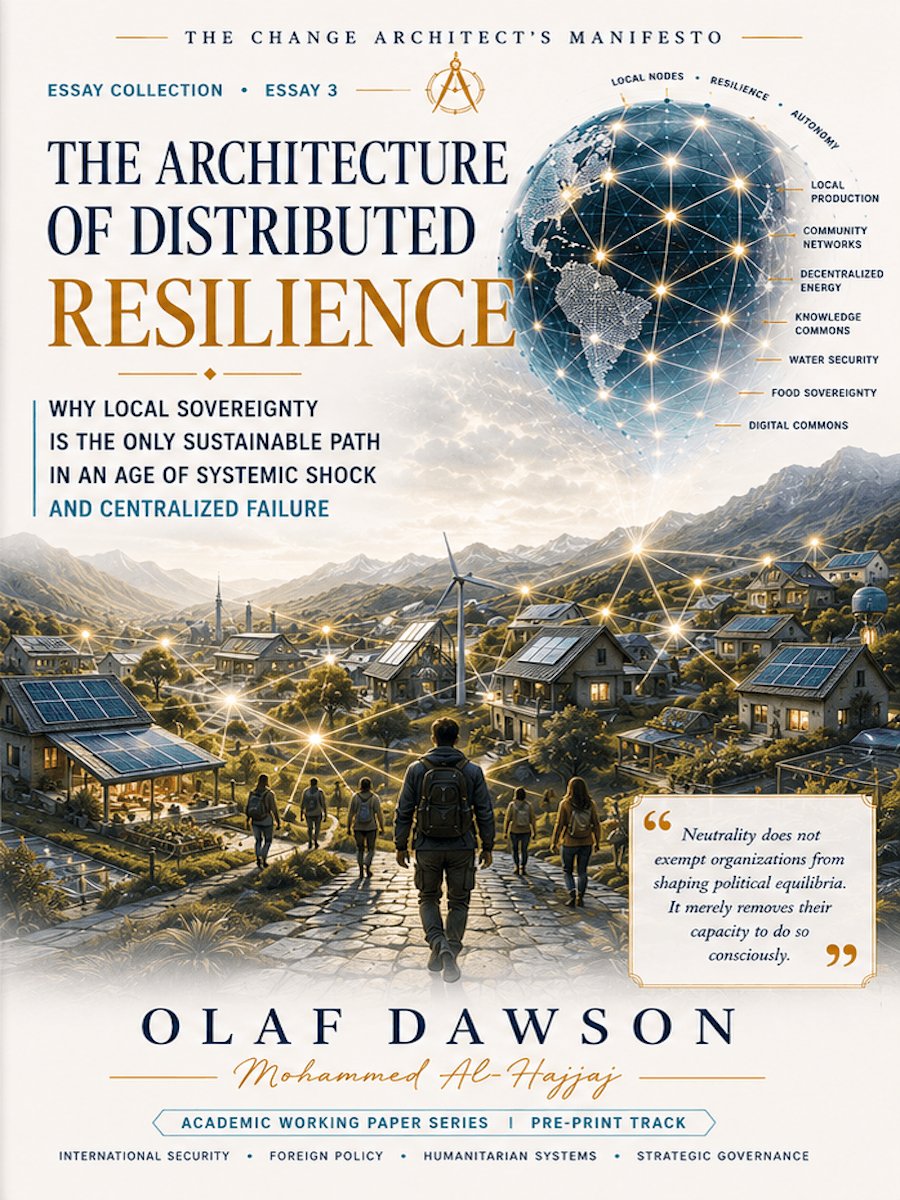
Decolonizing the Frontline
Moving localization from slogan to measurable power transfer.
Localization has become a watchword that rarely shifts real power. This paper examines why authority, money, and decision-making remain concentrated in international intermediaries despite a decade of commitments, and proposes the Decentralized Decision Ratio (DDR) as an honest measure of how much genuine authority actually sits with frontline and local actors.
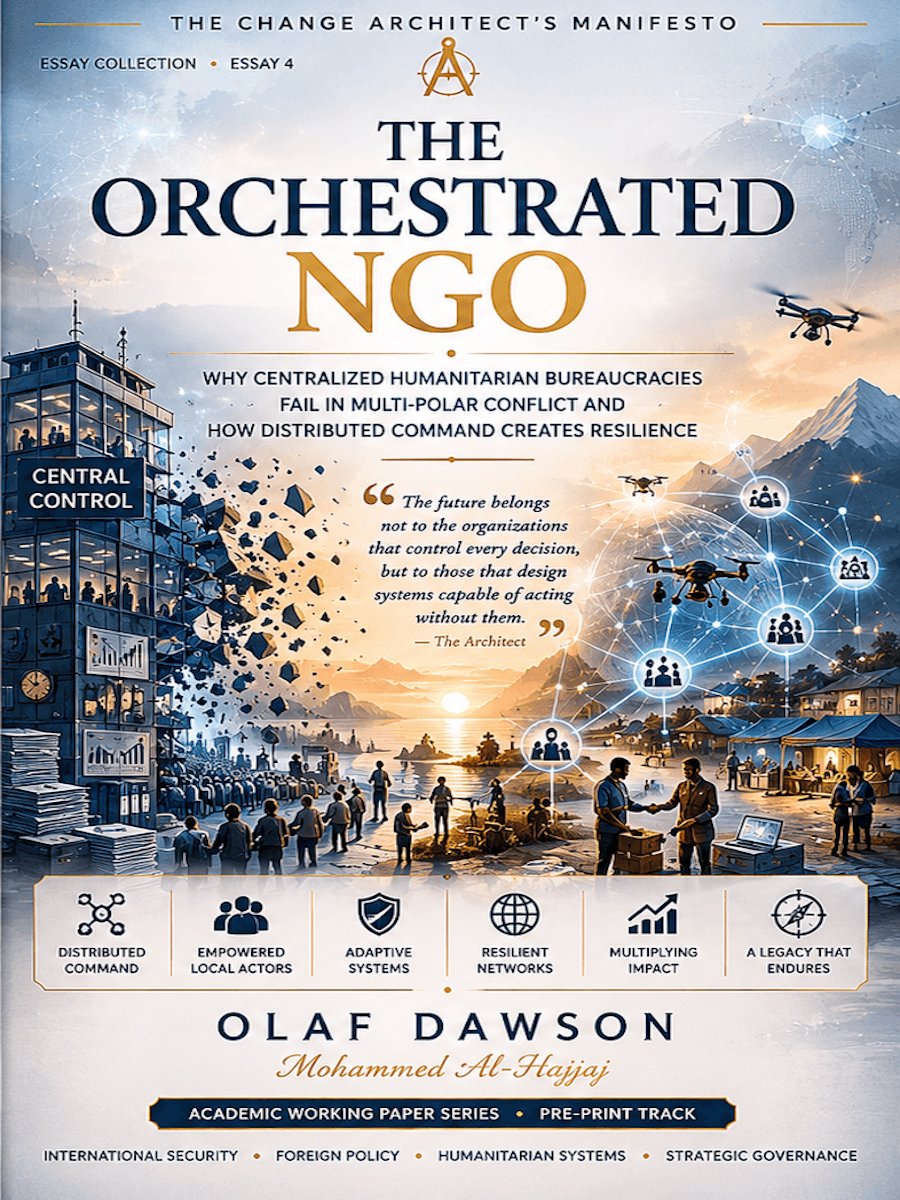
The Architect’s Mandate
Leading through orchestration in fragmented humanitarian systems.
Leadership in modern humanitarian systems is less command than orchestration across fragmented, multi-actor networks. This paper develops a model of leadership-through-orchestration and introduces the Intermediary Paralysis Factor (Ωip) to measure how quickly centralized networks seize up under disruption — and how distributing authority restores operational resilience.

The NGO Blueprint
Book I of the four-volume Confluence Series — the manifesto translated into a practitioner’s field manual, with a worked example of the Dependency Coefficient (Λd), a full series map, and an index of key terms. Forthcoming.
MBA thesis
The graduate research underpinning much of this programme’s thinking on NGO organisational design and institutional maturity, by Mohammed Al-Hajjaj.
Available to researchers, reviewers, and collaborators on request.
Measuring what the sector usually only asserts.
The original analytic instruments developed across the manifesto — tools to calculate, rather than merely observe, the dynamics of humanitarian governance.
Operational Equilibrium Shift
Quantifies how a resource injection moves local factional control — neutrality made measurable rather than assumed. Validated against the 2023 Sudan response.
Dependency Coefficient
Scores how exposed an organisation is to a single donor or funding stream. As Λd approaches 1.0 the organisation becomes a permanent feature of the crisis it was meant to resolve.
Intermediary Paralysis Factor
Measures how fast centralised INGO networks seize up under multi-actor disruption — and how distributing authority restores the capacity to hold access.
Fiduciary Autonomy Index
Captures the degree of genuine financial self-determination behind a mission — how much of the work survives if external funding is withdrawn.
Decentralised Decision Ratio
Measures how much real authority — money, hiring, programme design — actually sits with frontline and local actors versus international intermediaries.
Related instruments introduced in the essays include the Systemic Autonomy Velocity (Vsa) and the Institutional Maturity Index (IMI).